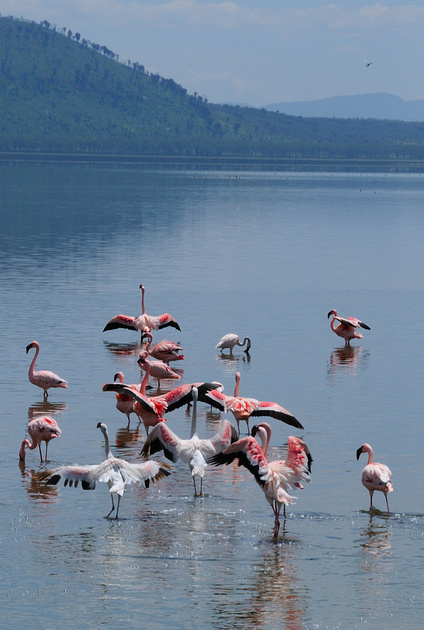
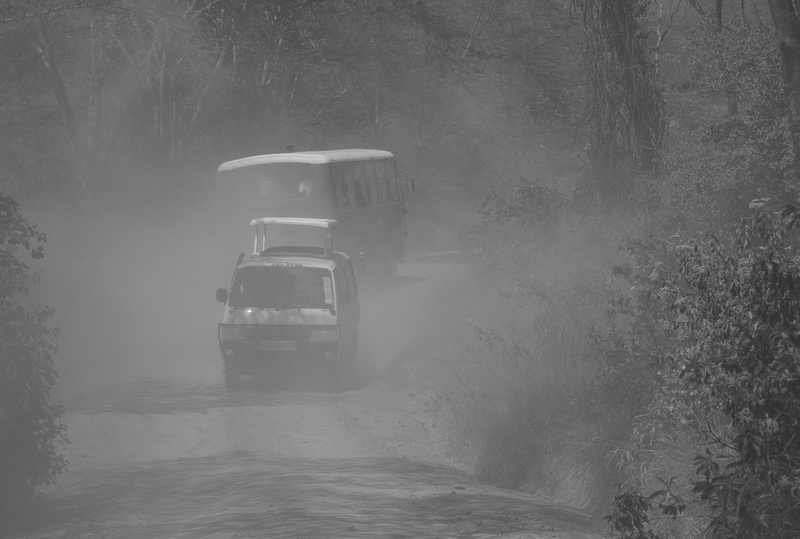
After taking our fill of flamingoes and pelicans at the Lake Nakuru shore, we head away from the water a little, with a drive across the plain and up to Baboon Cliff.
It's a dusty road, and almost completely devoid of baboons, but the view from the top shows us the lake shore we have just driven along.
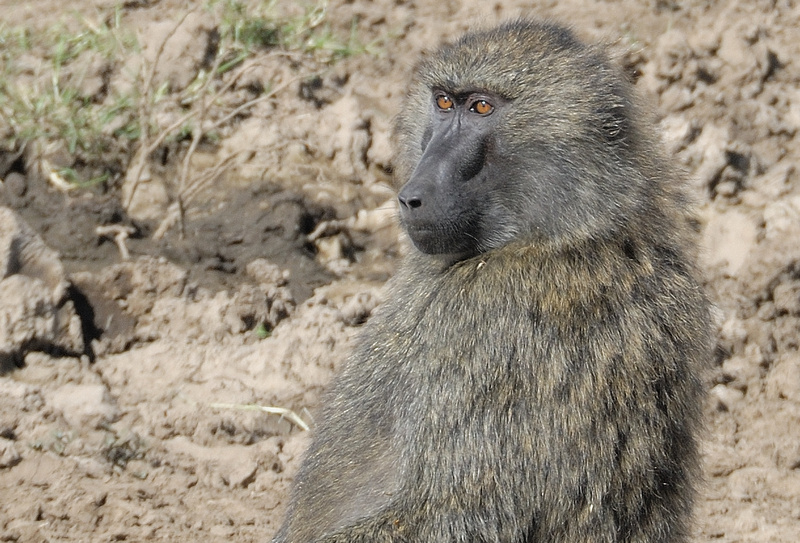
Fortunately, we catch up with some baboons later, and one is kind enough to pose.
Friday, February 27, 2009
Tuesday, February 24, 2009
Lake Nakuru - Flamingoes and Pelicans
Here we are with some more photos from my trip to Lake Nakuru National Park in Kenya last year.
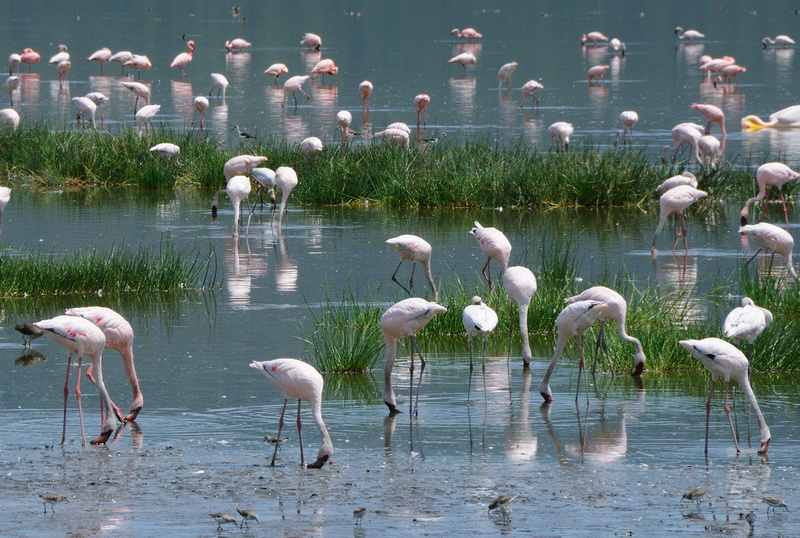
The lake itself is highly alkaline, and as such contains a huge amount of algae - enough to support thousands of animals. Everywhere you look the lake shallows are covered with birds.
The flamingoes at the lake are slightly less colourful than others I have seen in zoos over the years but no less impressive. (A flamingo's colouring depends on it's diet and zoo-bound flamingoes are often given the additive canthaxanthin, which is also often given to farmed salmon.)
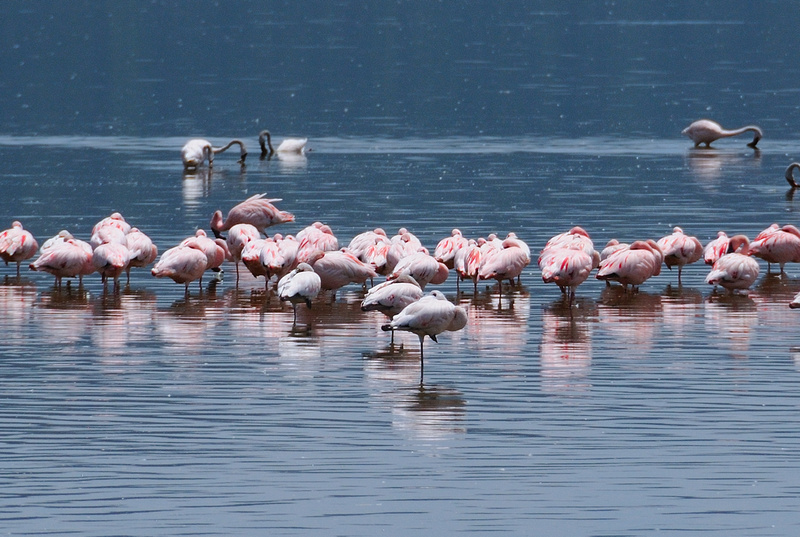
In the photos below we have two different species - greater and lesser - of flamingo. The lesser flamingo is slightly smaller than the greater flamingo, although the most obvious trait used to differentiate them is the beak - lesser flamingoes have almost completely black beaks, while the beak of the greater flamingo has only a black tip.
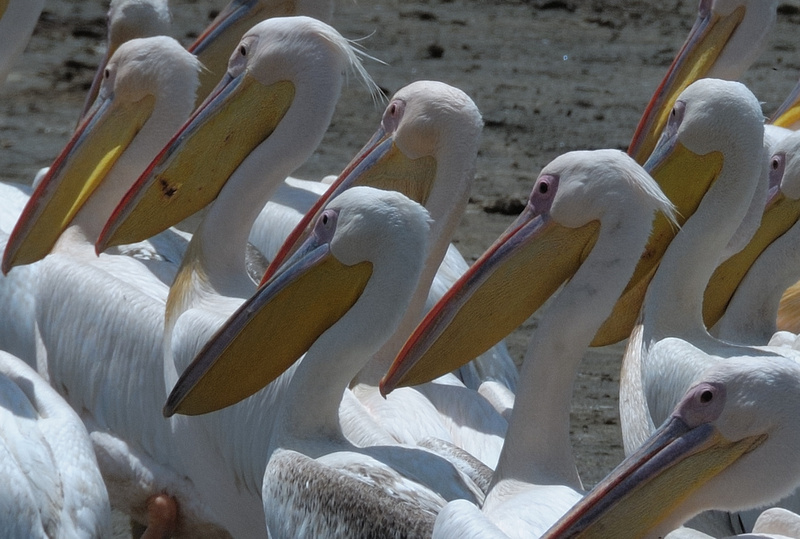
The lake also supports huge numbers of pelicans - they don't seem to like socialising with the flamingoes and stay huddled together in large groups, both in the shallows and on the lake shore.
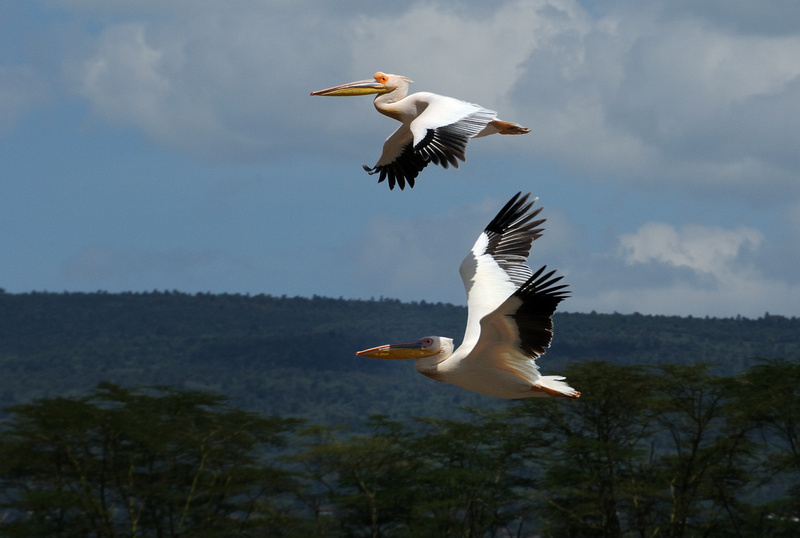
The photos below are of great white pelicans. They seem a little clumsy while waddling around on land, but look amazing while in flight. Fortunately, a few performed for us and I managed to get some of my favourite shots of the day of these huge birds in the air.
The lake itself is highly alkaline, and as such contains a huge amount of algae - enough to support thousands of animals. Everywhere you look the lake shallows are covered with birds.
The flamingoes at the lake are slightly less colourful than others I have seen in zoos over the years but no less impressive. (A flamingo's colouring depends on it's diet and zoo-bound flamingoes are often given the additive canthaxanthin, which is also often given to farmed salmon.)
In the photos below we have two different species - greater and lesser - of flamingo. The lesser flamingo is slightly smaller than the greater flamingo, although the most obvious trait used to differentiate them is the beak - lesser flamingoes have almost completely black beaks, while the beak of the greater flamingo has only a black tip.
The lake also supports huge numbers of pelicans - they don't seem to like socialising with the flamingoes and stay huddled together in large groups, both in the shallows and on the lake shore.
The photos below are of great white pelicans. They seem a little clumsy while waddling around on land, but look amazing while in flight. Fortunately, a few performed for us and I managed to get some of my favourite shots of the day of these huge birds in the air.
By
Dave Licence
Saturday, February 21, 2009
Lake Nakuru - Zebras and Storks
I find myself in Pune, India's seventh largest city, having just missed a train to Mumbai, the world's fourth largest urban centre, due to a sleepy driver and a phone number mix-up.
What better time to start talking of my time in Kenya last year?
I was in Nairobi for a little under two weeks - which meant one full weekend free from work and free to do something touristy.
Saturday started the weekend well, with a trip to see UB40 (well Ali Campbell plus band) - good fun. Sunday was the day I was looking forward to though - a safari to Lake Nakuru National Park.
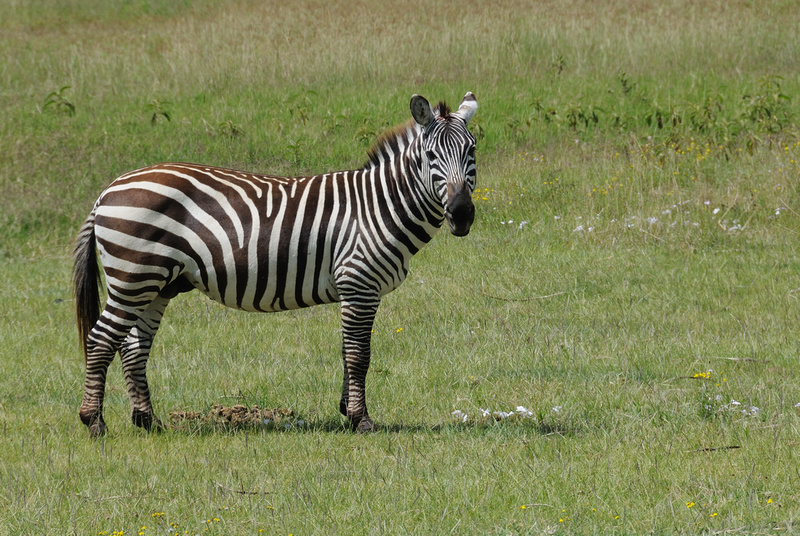
On entry to the park we immediately start seeing the animals we came for - beginning with a small group of zebra. We'd already seen a few zebras from the car on the journey to the park, but its great to see some close up in their natural habitat.
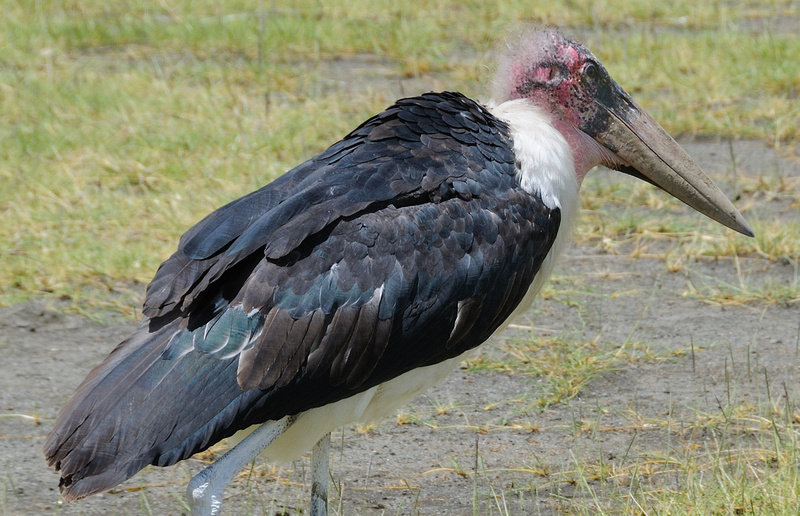
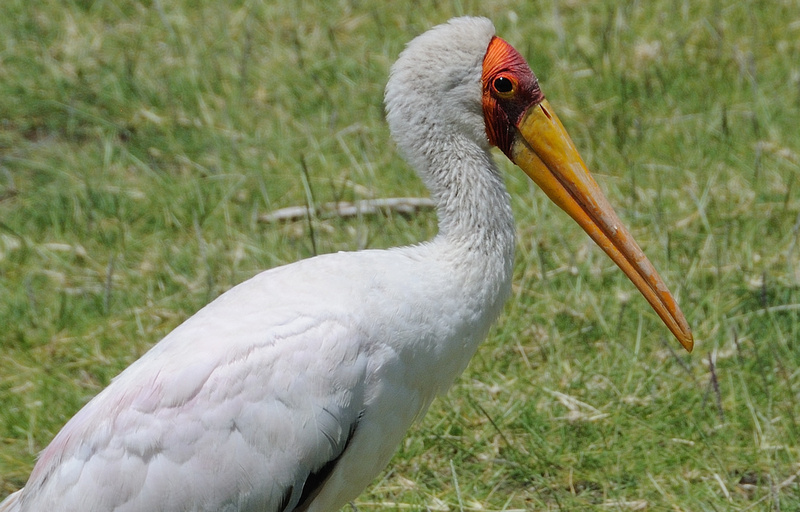
Next - on to the birds. In fact it is impossible not to see the birds at the lake - there are literally thousands of pelicans and flamingoes, which I'll come on to later. First, we have a couple of storks: a Marabou - big, rangy, ugly - and a Yellow-Billed - slim, smooth and colourful.
What better time to start talking of my time in Kenya last year?
I was in Nairobi for a little under two weeks - which meant one full weekend free from work and free to do something touristy.
Saturday started the weekend well, with a trip to see UB40 (well Ali Campbell plus band) - good fun. Sunday was the day I was looking forward to though - a safari to Lake Nakuru National Park.
On entry to the park we immediately start seeing the animals we came for - beginning with a small group of zebra. We'd already seen a few zebras from the car on the journey to the park, but its great to see some close up in their natural habitat.
Next - on to the birds. In fact it is impossible not to see the birds at the lake - there are literally thousands of pelicans and flamingoes, which I'll come on to later. First, we have a couple of storks: a Marabou - big, rangy, ugly - and a Yellow-Billed - slim, smooth and colourful.
By
Dave Licence
Thursday, December 04, 2008
Sundial
Another photo from the Peak District for you.
This photo shows part of the vertical sundial above the doorway at All Saints Church in Bakewell (a nice spot for a good view of the town).
When I originally downloaded this photo from my camera and compared the time shown to the date recorded against the picture I thought the dial was wrong - the time shown is 11-ish, while the time I had was 12:15. However, I then realised that it was my camera that was wrong as it hadn't been adjusted correctly for the clocks going back the previous autumn.
The markings on a sundial's face have to be designed specifically for the latitude at which it will be used. If a sundial is moved north or south it will no longer be correct, unless it is tilted by the same number of degrees as it has been moved. If you'd like to know more about sundials, this site is a good read.
This photo shows part of the vertical sundial above the doorway at All Saints Church in Bakewell (a nice spot for a good view of the town).
When I originally downloaded this photo from my camera and compared the time shown to the date recorded against the picture I thought the dial was wrong - the time shown is 11-ish, while the time I had was 12:15. However, I then realised that it was my camera that was wrong as it hadn't been adjusted correctly for the clocks going back the previous autumn.
The markings on a sundial's face have to be designed specifically for the latitude at which it will be used. If a sundial is moved north or south it will no longer be correct, unless it is tilted by the same number of degrees as it has been moved. If you'd like to know more about sundials, this site is a good read.
By
Dave Licence
Monday, December 01, 2008
Contrails
I suddenly realise I haven't posted in a horrendously long time.
I'm currently sitting in an apartment after a relatively stress-free day at work while the rest of my team are still at the office beavering away on their own tasks - I'm doing the user training, which tends to mean fairly strict start and end times and everything is prepared well in advance for a change so there's no need to develop tomorrow's course tonight.
I'm also looking through a load of photos I took yesterday while on safari (oh yeah I guess I should mention I'm in Kenya. It's a tough job this, but someone has to do it). OK so they'll be the standard set of clichéd shots taken by many tourists before and after me, but hopefully there will be some good ones which I can post when I am back home.
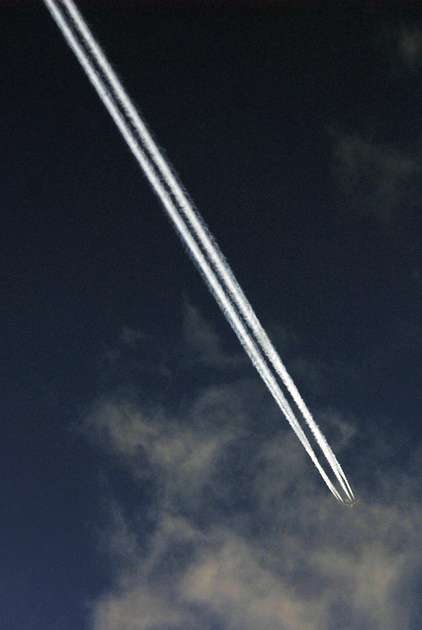
In the meantime, here's a shot I got while on holiday in the Peak District earlier this year. There's a lot of conspiracy theories on contrails if you search around a bit.
I'm currently sitting in an apartment after a relatively stress-free day at work while the rest of my team are still at the office beavering away on their own tasks - I'm doing the user training, which tends to mean fairly strict start and end times and everything is prepared well in advance for a change so there's no need to develop tomorrow's course tonight.
I'm also looking through a load of photos I took yesterday while on safari (oh yeah I guess I should mention I'm in Kenya. It's a tough job this, but someone has to do it). OK so they'll be the standard set of clichéd shots taken by many tourists before and after me, but hopefully there will be some good ones which I can post when I am back home.
In the meantime, here's a shot I got while on holiday in the Peak District earlier this year. There's a lot of conspiracy theories on contrails if you search around a bit.
By
Dave Licence
Sunday, August 10, 2008
Tuesday, August 05, 2008
How To ... Bemusement
Sometimes you just need to grin and bear it.
Sometimes you just need to bear it.
No matter what is going on around you or being done to you, you know there is nothing you can do to change it.
It's at times like this when you just need to zone-out and try to forget that in years to come this moment may come back to haunt you ... it's time to look 'so lost in thought as to be unaware of one's surroundings.'
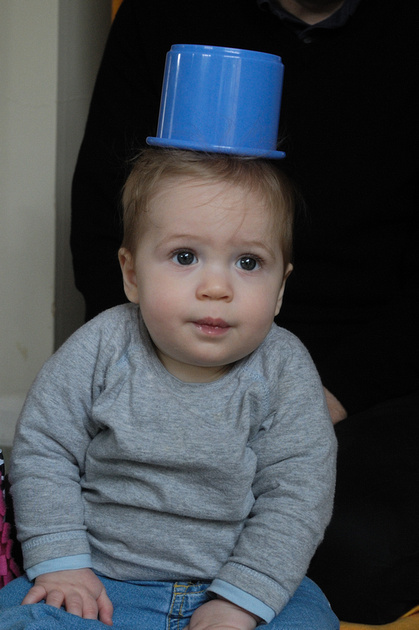
This third instalment in the How To ... series is for when laughing just isn't right - How To Look Bemused.
Sometimes you just need to bear it.
No matter what is going on around you or being done to you, you know there is nothing you can do to change it.
It's at times like this when you just need to zone-out and try to forget that in years to come this moment may come back to haunt you ... it's time to look 'so lost in thought as to be unaware of one's surroundings.'
This third instalment in the How To ... series is for when laughing just isn't right - How To Look Bemused.
By
Dave Licence
Subscribe to:
Posts (Atom)